

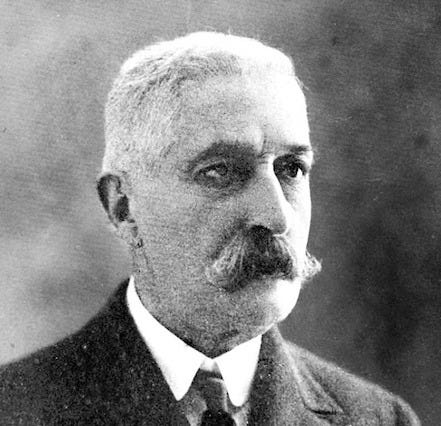
“Cavalleria Rusticana” by Giovanni Verga was first published in 1880 and is now in the public domain.
TURIDDU MACCA, son of old Mother Nunzia, when he came home from being a soldier, went swaggering about the village square every Sunday, showing himself off in his bersagliere’s uniform with the red fez cap, till you’d have thought it was the fortune-teller himself come to set up his stall with the cage of canaries. The girls going to Mass with their noses meekly inside their kerchiefs stole such looks at him, and the youngsters buzzed round him like flies. And he’d brought home a pipe with the king on horseback on the bowl, simply life-like, and when he struck a match on his trousers behind, he lifted his leg up as if he was going to give you a kick.
But for all that, Lola, Farmer Angelo’s daughter, never showed a sign of herself, neither at Mass nor on her balcony; for the simple reason that she’d gone and got herself engaged to a fellow from Licodia, a carter who took contracts, and had four handsome Sortino mules of his own in his stable.
When Turiddu first got to hear of it, oh, the devil! he raved and swore!—he’d rip his guts out for him, he’d rip ’em out for him, that Licodia fellow!—But he never did a thing, except go and sing every slighting song he could think of under the beauty’s window.
“Has Mother Nunzia’s Turiddu got nothing else to do but sing songs like a forlorn sparrow, every mortal night?” said the neighbours.
However, he ran into Lola at last, as she was coming back from her little pilgrimage to Our Lady of Peril; and she, when she saw him, never turned a hair, as if it was nothing to do with her.
“It’s rare to set eyes on you!” he said to her.
“Hello, Turiddu! They told me you’d come back on the first of this month.”
“They told me more than that!” he replied.”Is it right as you’re marrying Alfio, as contracts for carting?”
“God willing, I am,” replied Lola, twisting the corners of her kerchief at her chin.
“There’s a lot o’ God willing about it! You suit your own fancy! And it was God willing as I should come home from as far as I did, to hear this nice bit of news, was it, Lola?”
The poor man tried to keep a good face, but his voice had gone husky; and he walked on at the heels of the girl, the tassel of his fez cap swinging melancholy to and fro, on his shoulders. And to tell the truth, she was sorry to see him with such a long face; but she hadn’t the heart to cheer him up with false promises.
“Look here, Turiddu,” she said at last to him, “let me go on and join the others. What do you think folks’ll say if they see me with you?”
“You’re right!” replied Turiddu.”Now you’re going to marry that chap Alfio, as has got four mules of his own in his stable, it’d never do to set folks talking! Not like my poor old mother, as had to sell our bay mule and the bit of a vineyard, while I was away soldiering. —Ah well, the time’s gone by when Bertha sat a-spinning!—And you’ve forgotten how we used to talk together at the window in the yard, and how you gave me that handkerchief before I went away—God knows how many tears I cried in it, going that far off, I’d almost forgotten even the name of where I came from. —Well, good-bye, then, Lola. It showered a while, and then left off, and all was over between us!”
And so Miss Lola married the carter; and the Sunday after, there she sat on her balcony, with her hands spread on her stomach to show all the great gold rings her husband had given her. Turiddu kept going back and forth, back and forth up the narrow street, his pipe in his mouth and his hands in his pockets, to show he didn’t care, and ogling all the girls. But it gnawed him inside himself to think that Lola’s husband should have all that gold, and that she pretended not to notice him, when he passed.
“I’ll show that bitch summat, afore I’ve done!” he muttered to himself.
Across from Alfio’s house lived Farmer Cola, the wine-grower, who was as rich as a pig, so they said, and who had a daughter on his hands. Turiddu so managed it that he got Farmer Cola to take him on, helping in the vines, and then he started hanging round the house, saying nice things to the girl.
“Why don’t you go and say all those sweet nothings to Mrs Lola, over the road?” Santa replied to him.
“Mrs Lola thinks she’s somebody. Mrs Lola’s married my Lord Tomnoddy, she has!”
“And I’m not good enough for a Lord Tom-noddy, am I?”
“You’re worth twenty Lolas. And I know somebody as wouldn’t look at Mrs Lola, nor at the saint she’s named after, if you was by. Mrs Lola’s not fit to bring you your shoes, she’s not.”
“Ah là! it’s sour grapes, as the fox said when he couldn’t reach———”
“No, he didn’t! He said: ‘Ah, but you’re sweet, my little gooseberry!’ “
“Eh! Keep your hands to yourself, Turiddu!”
“Are you afraid I shall eat you?”
“I’m neither afraid of you nor your Maker.”
“Eh! your mother was a Licodia woman, we know it! You’ve got a temper right enough. Oh! I could eat you with my eyes!”
“Eat me with your eyes, then; we shall make no crumbs! But while you’re at it, lift me that bundle of kindling.”
“I’d lift the whole house up for you, that I would.”
She tried to hide her blushes, threw a stick at him which she’d got in her hand, and for a wonder missed him.
“Let’s look sharp! We shall bind no kindling with nothing but talk.”
“If I was rich, I should look for a wife like you, Miss Santa.”
“Eh well! I shan’t marry my Lord Tom-noddy, like Mrs Lola, but I shan’t come empty-handed neither, when the Lord sends me the right man.”
“Oh ay! we know you’re rich enough, we know that.”
“If you know it, then hurry up; my Dad’ll be here directly, and I don’t want him to catch me in the yard.”
Her father began by making a wry face, but the girl pretended not to notice. The tassel of the bersagliere’s cap had touched her heart, swinging in front of her eyes all the time. When her father put Turiddu out of the door, she opened the window to him, and stood there chattering to him all the evening, till the whole neighbourhood was talking about nothing else.
“I’m crazy about you,” Turiddu said.”I can neither eat nor sleep.”
“You say so———”
“I wish I was Victor Emmanuel’s son, so I could marry you.”
“You say so———”
“Oh, Madonna, I could eat you like bread!”
“You say so———”
“Ah, I tell you it’s true!”
“Eh, mother, mother!”
Night after night Lola listened, hidden behind a pot of sweet basil in her window, and going hot and cold by turns. One day she called to him:
“So that’s how it is, Turiddu? Old friends don’t speak to one another any more!”
“Why!” sighed the youth.”It’s a lucky chap as can get a word with you.”
“If you want to speak to me, you know where I live,” replied Lola.
Turiddu went so often to speak to her, that Santa was bound to notice it, and she slammed the window in his face. The neighbours nodded to one another, with a smile, when the bersagliere went by. Lola’s husband was away, going round from fair to fair, with his mules.
“I mean to go to confession on Sunday. I dreamed of black grapes last night,” said Lola.
“Oh, not yet, not yet!” Turiddu pleaded.
“Yes. Now it’s getting near Easter, my husband will want to know why I’ve not been to confession.”
“Ah!” murmured Farmer Cola’s Santa, waiting on her knees for her turn in front of the confessional, where Lola was having a great washing of her sins: “It’s not Rome I’d send you to for a penance, it isn’t, my word it isn’t!”
Master Alfio came home with his mules, and a good load of cash, and brought a fine new dress as a present to his wife, for the festival.
“You do well to bring her presents,” his neighbour Santa said to him.”She’s been adorning your house for you, while you’ve been away.”
Master Alfio was one of those carters who go swaggering beside their horse with their cap over their ear; so when he heard his wife spoken of in that way, he went white as if he’d been stabbed.
“By God, though!” he exclaimed.”If you’ve seen more than there was to see, I won’t leave you your eyes to cry with, neither you nor the rest of your folks.”
“I’m not the crying sort,” replied Santa.”I didn’t cry even when I saw with my own eyes Mother Nunzia’s Turiddu creeping into your wife’s house at night.”
“All right!” replied Alfio.”I’m much obliged!”
Now that the cat had come back, Turiddu no longer hung round the little street in the daytime, but whiled away his chagrin at the inn, with his friends; and on the Saturday evening before Easter they had a dish of sausages on the table. When Master Alfio came in, Turiddu knew in an instant, from the way he fixed his eyes on him, what he’d come for, and he put his fork down on his plate.
“Did you want me for anything, Alfio?” he said.
“Nothing particular, Turiddu. It’s quite a while since I’ve seen you, and I thought I’d have a word with you—you know what about.”
At first Turiddu had offered him his glass, but he put it aside with his hand. Then Turiddu rose, and said;
“Right you are, Alfio!”
The carter threw his arms round his neck.
“Shall you come to the cactus grove at Canziria to-morrow morning, and we can talk about that bit of business of ours, boy?”
“Wait for me on the high-road at sunrise, and we’ll go together.”
With these words, they exchanged the kiss of challenge; and Turiddu nipped the carter’s ear between his teeth, thus promising solemnly not to fail him.
His friends had all quietly abandoned the sausages, and they walked with Turiddu home. Mother Nunzia, poor thing, sat up waiting for him till late every evening.
“Mother,” Turiddu said to her, “you remember when I went for a soldier, you thought I should never come back? Now kiss me like you did then, because I’m going off in the morning, a long way.”
Before daybreak he took his clasp-knife, which he had hidden under the hay when he was taken off as a conscript to the army, and then he set out for the cactus grove at Canziria.
“Oh Jesu-Maria! where are you going in such a fury?” whimpered Lola in dismay, as her husband was getting ready to go out.
“I’m not going far,” replied Master Alfio.”And better for you if I never come back.”
Lola, in her night-dress, kneeled praying at the foot of the bed, pressing to her lips the rosary which Fra Bernardino had brought from the Holy Land, and repeating all the Ave Marias there were to repeat.
“You see, Alfio,” Turiddu began, after he had walked for some distance along the road beside his silent companion, who had his cap pulled down over his eyes, “as true as God’s above, I know I’m in the wrong, and I would let myself be killed. But my old mother got up before I started out, pretending she had to see to the fowls, and I could tell she knew. So as sure as God’s above, I’m going to kill you like a dog, so the poor old woman shan’t have to cry her eyes out.”
“All right, then,” replied Alfio, pulling off his sleeved waistcoat.”Now we shall strike hard, both of us.”
They were both good fighters with the knife. Alfio struck the first thrust, and Turiddu was quick enough to catch it on his arm. When he gave it back, he gave a good one, aiming at the groin.
“Ah! Turiddu. Do you really mean to kill me?”
“Yes, I told you! Since I saw my old woman with the fowls, I can’t get her out of my eyes.”
“Then open your eyes, then!” Alfio shouted at him; “I’ll give you more than you asked for.”
And as the carter stood on guard, doubled up so as to keep his left hand over his wound, which hurt him, his elbow almost brushing the ground, suddenly he seized a handful of dust and threw it full in his enemy’s eyes.
“Ah!” screamed Turiddu, blinded.”I’m done!”
He tried to save himself by jumping desperately backwards, but Alfio caught him up with another stab in the stomach, and a third in the throat.
“——and three! That’s for the house which you adorned for me! And now your mother can mind her fowls——”
Turiddu reeled about for a moment or two here and there among the cactuses, then fell like a stone. The blood gurgled frothing from his throat, he couldn’t even gasp: “Oh, Mother!”
Translated by D. H. Lawrence
You’ve been reading some of the best short stories ever written—and there’s more to come. Subscribe to Story Stumbler and receive our latest additions direct to your inbox. Works in the public domain are free for all subscribers.
This passion project of ours wouldn’t be possible if it weren’t for the support of readers like you. If you enjoy reading and browsing our collection and have the means to donate, you can make a one-time contribution at Buy Me a Coffee. Even a small donation means the world to us and goes a long way towards helping our humble library grow.